Grilling Season 2026 Flavor Predictions: The Bold, Unexpected Tastes Taking Over Backyards
The backyard grill has officially become America’s most adventurous kitchen. While everyone’s still talking about those “20 BBQ recipes you need to try this weekend” blowing up social feeds, something deeper is happening behind the smoke. Pitmasters, flavor scientists, and home cooks are quietly rewriting the grilling playbook—and grilling season 2026 flavor predictions reveal a shift that’s less about chasing viral moments and more about building entirely new taste architectures.
This isn’t your uncle’s “sprinkle some paprika and call it Memphis-style” approach. The 2026 season is delivering precision-crafted flavor systems, cross-cultural ingredient marriages, and technique-driven taste extraction methods that would make a Michelin chef jealous of your patio setup.
Why 2026 Marks the End of “Regional Style” Loyalty
For decades, American BBQ meant choosing your camp: Texas brisket, Carolina whole hog, Kansas City sweet, or Alabama white sauce. The 2026 season is demolishing these walls—not disrespectfully, but evolutionarily.
What we’re seeing is intentional flavor hybridization. Pitmasters are extracting the why behind regional classics and transplanting those principles into unexpected contexts. Think: the bark-building science of Central Texas brisket applied to Moroccan ras el hanout-rubbed lamb shoulder. Or the vinegar-sharpness of Eastern Carolina whole hog reimagined as a finishing mist for Korean gochujang-glazed pork belly burnt ends.
The breakthrough insight? Regional styles were never about rigid recipes. They were responses to local ingredients, climate, and available fuel. Modern grillers with access to global spice markets, precision thermometers, and dual-zone cooking setups can now engineer those same satisfying taste experiences without geographic constraints.
This liberation is driving the most exciting grilling season 2026 flavor predictions: the rise of “principle-based grilling” where technique traditions meet ingredient freedom.
The Three Flavor Frontiers Dominating 2026
After tracking early-season menus, competition circuits, and equipment manufacturer R&D leaks, three distinct flavor territories are emerging with enough momentum to define the year.
Fermented and Aged Rubs: Umami as Foundation
Dry rubs are getting a microbial upgrade. The 2026 breakthrough is pre-fermented spice blends—rubs incorporating koji, miso powder, or even lab-cultured garum (ancient Roman fermented fish sauce, now being recreated by forward-thinking producers).
The science is compelling: fermentation breaks down proteins into glutamates, creating that savory depth that makes you involuntarily close your eyes on first bite. When applied to high-heat grilling surfaces, these compounds undergo Maillard reactions at accelerated rates, producing crusts with complexity previously impossible in home cooking.
Practical entry point: Mix 2 tablespoons white miso powder into your standard beef rub. The salt concentration already present in most miso products means you’ll want to reduce added salt by roughly 30%. Apply 24 hours before cooking for enzyme activity to begin tenderizing surface proteins.
Smoke-Layered Sweetness: Beyond Maple and Brown Sugar
Sweet elements in BBQ aren’t new, but their sources are transforming. The 2026 palate is rejecting one-dimensional sweetness in favor of smoke-compatible sugars that contribute their own aromatic signatures.
Piloncillo (unrefined Mexican cane sugar) is surging for its caramel-burnt notes that intensify rather than burn under sustained heat. Date syrup is replacing molasses in Gulf Coast-adjacent cooking for its cleaner sweetness and subtle tannin structure. Most unexpectedly, pine bark syrup (traditionally Finnish, now being produced by Appalachian foragers) is appearing on competition chicken thighs for its resinous, almost rosemary-adjacent sweetness that pairs explosively with hickory smoke.
The technique shift: applying these sugars in multiple phases rather than single glazes. A thin piloncillo rub at the start builds foundation caramelization. A date syrup mop during the stall adds moisture with flavor. A final pine bark glaze creates lacquered finish with aromatic lift.
The “Fifth Quarter” Vegetable Revolution
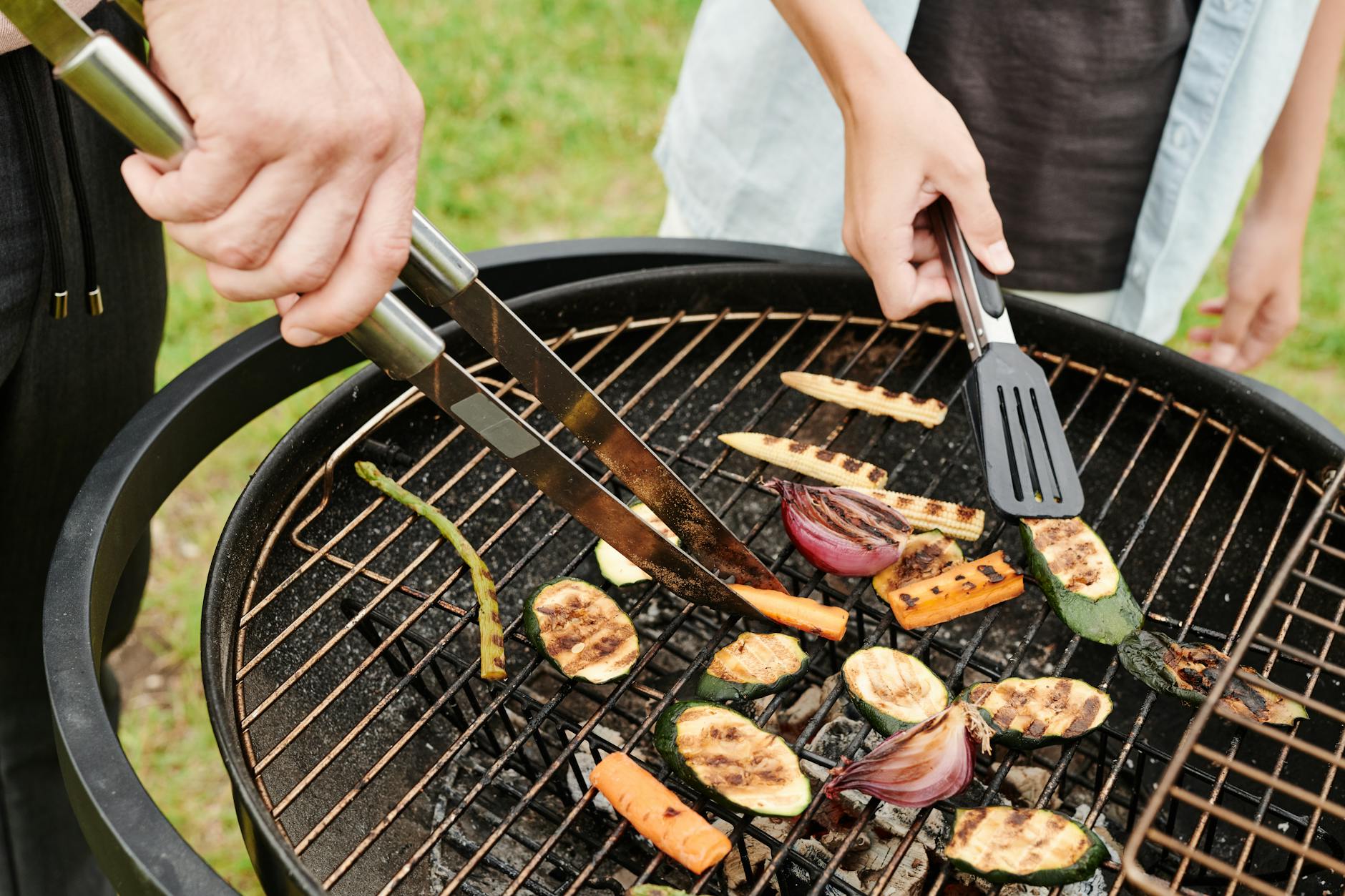
Grilling’s protein obsession is being disrupted by vegetable cookery that’s technically more sophisticated than the meat alongside it. This isn’t “accommodating vegetarians”—it’s competitive advantage.
Whole cabbage, buried in embers for 90 minutes then halved and finished over direct heat with anchovy-garlic bagna cauda, is appearing at Texas Hill Country cookouts. Leeks, buried in ash until completely blackened externally, then scraped and dressed with fermented black bean vinaigrette, are becoming the unexpected star of “20 BBQ recipes you need to try this weekend” listicles for good reason.
The flavor principle: vegetables offer structural diversity that proteins can’t match. The same cabbage delivers crisp outer leaves, yielding mid-layers, and nearly custard-like core. Each texture carries smoke differently, creating a single-ingredient flavor journey.
Equipment Evolution Enabling Flavor Exploration
Predictions about taste must account for the tools making them possible. Two 2026 equipment trends are directly expanding flavor possibility:
Precision pellet systems with wood blending programs are moving beyond “hickory vs. mesquite” to minute-by-minute smoke profiles. New controllers can execute programmed sequences: oak base for 2 hours, fruitwood transition for 1 hour, no smoke finish for clean bark formation. This means grillers can now build smoke flavor in compositional layers, like a perfumer constructing a scent pyramid.
Infrared searing stations with moisture retention are solving the eternal griller’s dilemma: crust versus juiciness. New ceramic infrared designs reaching 1,200°F+ with controlled exposure times are allowing flavor-forward crust development without overcooking interiors. This matters because it enables bolder rub applications—previously, heavy spice crusts risked burning before interior doneness. Now, that koji-rubbed ribeye can develop genuine crust without compromise.
Your 2026 Flavor Action Plan
The gap between prediction and plate is where most food writing fails. Here’s how to actually engage with these trends this season:
This weekend: Source one fermented element for your next cook. White miso powder is widely available; koji rice requires more effort but rewards with transformative results. Apply to a forgiving cut like chicken thighs.
This month: Experiment with smoke-layered sweetness. Replace your standard sugar source in one trusted recipe with piloncillo or date syrup. Document the difference in caramelization color and final taste complexity.
This season: Dedicate one cook entirely to vegetable excellence. Choose one vegetable, learn its internal structure, and design a multi-zone, multi-phase cook that treats it with the same attention you’d give a brisket.
The Bottom Line on Grilling Season 2026 Flavor Predictions
The most accurate grilling season 2026 flavor predictions aren’t about specific ingredients—they’re about expanded possibility. The grill is becoming a platform for intentional, educated, globally-informed flavor construction rather than inherited tradition or viral imitation.
The backyard cooks who thrive this season will be those who understand that every trend listed here—fermented rubs, smoke-layered sweetness, vegetable sophistication, precision equipment—is connected by a single thread: the willingness to treat outdoor cooking with the deliberation previously reserved for indoor kitchens.
Fire management, ingredient sourcing, timing, and rest periods. These fundamentals haven’t changed. But the flavor vocabulary available to express them has expanded exponentially. Your move.