How to Smoke Brisket Flat: The 2026 Guide to Even Cooking and Perfect Bark
As the 2026 competitive BBQ season kicks into high gear, one trend is dominating backyard conversations: the rise of the “flat-only” smoke. With beef prices stabilizing and more home cooks investing in precision smokers, learning how to smoke brisket flat has become the ultimate test of patience and technique. Unlike the forgiving point cut, the flat is lean, unforgiving, and prone to drying out if you treat it like its fattier counterpart. But when you nail it? You get those uniform, competition-style slices with a peppery bark that shatters like glass.
Whether you’re cooking for a crowd or just want sandwich-ready meat without the 16-hour commitment of a whole packer, this guide breaks down the exact process for smoking a brisket flat that rivals your favorite Texas joint.
Selecting and Trimming Your Brisket Flat
You can’t cook a great flat if you start with a bad one. In 2026, butchers are seeing more demand for “Choice” and “Prime” grade flats specifically, so you have options. Look for a flat that is at least 1.5 inches thick at the narrow end—anything thinner will dry out before the fat renders.
The Trim: Unlike a whole packer where you leave a thick fat cap, a flat needs precision. Trim the hard, waxy fat down to 1/4 inch, but here’s the crucial part: square off the edges. The flat has a natural “grain” running one way; trim any thin, tapered edges that will burn before the center cooks. You want a uniform rectangle for even heat exposure.
Pro tip: Remove the “deckle” (the thick, hard fat layer on the bottom) entirely. On a flat, this won’t render properly and creates a rubbery barrier between your meat and smoke.
The Right Rub and Wood for Lean Beef
Because the flat lacks the internal marbling of the point, your seasoning needs to build a crust that protects the meat. Skip the sugar-heavy rubs—they’ll burn during the long cook and turn bitter.
The 2026 Competition Blend:
- 2 parts coarse black pepper (16-mesh “cafe grind” is trending this year)
- 1 part kosher salt (Diamond Crystal)
- 1/2 part garlic powder
- 1/2 part onion powder
Apply the rub 12-24 hours ahead if possible. This dry-brine effect helps the flat retain moisture. If you’re short on time, let it sit at room temperature for 45 minutes before smoking—never put a cold flat on the pit.
Wood Selection: For 2026, post oak remains the gold standard for brisket, but we’re seeing a shift toward pecan for flats specifically. Pecan burns slightly cooler and sweeter, complementing the lean beef without overpowering it. Avoid mesquite—it’s too aggressive for a cut with this little fat protection.
Temperature Control and the Stall
This is where most backyard cooks fail when learning how to smoke brisket flat. The flat has less collagen than the point, meaning it will hit the “stall” (when evaporation cools the meat) faster and stay there longer.
The Setup: Run your smoker at 250°F (not 225°F). The slightly higher heat is essential for rendering what little fat exists without drying the meat. Place the flat fat-side down if your heat comes from below (like on an offset), or fat-side up if using a ceramic kamado where heat radiates from above.
The Stall Strategy: Expect the internal temperature to plateau around 160-165°F. Do not panic. This is when the magic happens, but it’s also when the flat can turn into leather. After 3 hours of stall time, check the bark. If it’s dark mahogany and set (doesn’t scratch off with a fingernail), it’s time to wrap.
Wrapping and Finishing for Maximum Juiciness
The “Texas Crutch” (wrapping in foil) works, but for 2026, we’re using pink butcher paper—specifically the 18-inch wide rolls that have become standard at every serious BBQ joint this year. Paper breathes just enough to preserve bark while speeding up the cook.
The Wrap:
- Lay out two overlapping sheets of butcher paper (about 4 feet total).
- Spritz the flat lightly with beef broth or water (2026 trend: use a 50/50 mix of broth and rendered beef tallow for extra richness).
- Wrap tightly, folding the edges like a present.
- Return to the smoker, seam-side down.
The Finish: Continue cooking until the internal temperature reaches 203°F in the thickest part, but start checking at 195°F. The flat is done when a probe slides in like it’s going into room-temperature butter—no resistance. Total cook time usually runs 6-8 hours for a 5-7 pound flat, significantly faster than a whole packer.
Resting and Slicing Against the Grain
You’ve waited hours; don’t ruin it now. Rest the wrapped flat in a dry cooler (the “faux Cambro” method) for at least 2 hours, or up to 4. This allows the muscle fibers to relax and reabsorb juices.
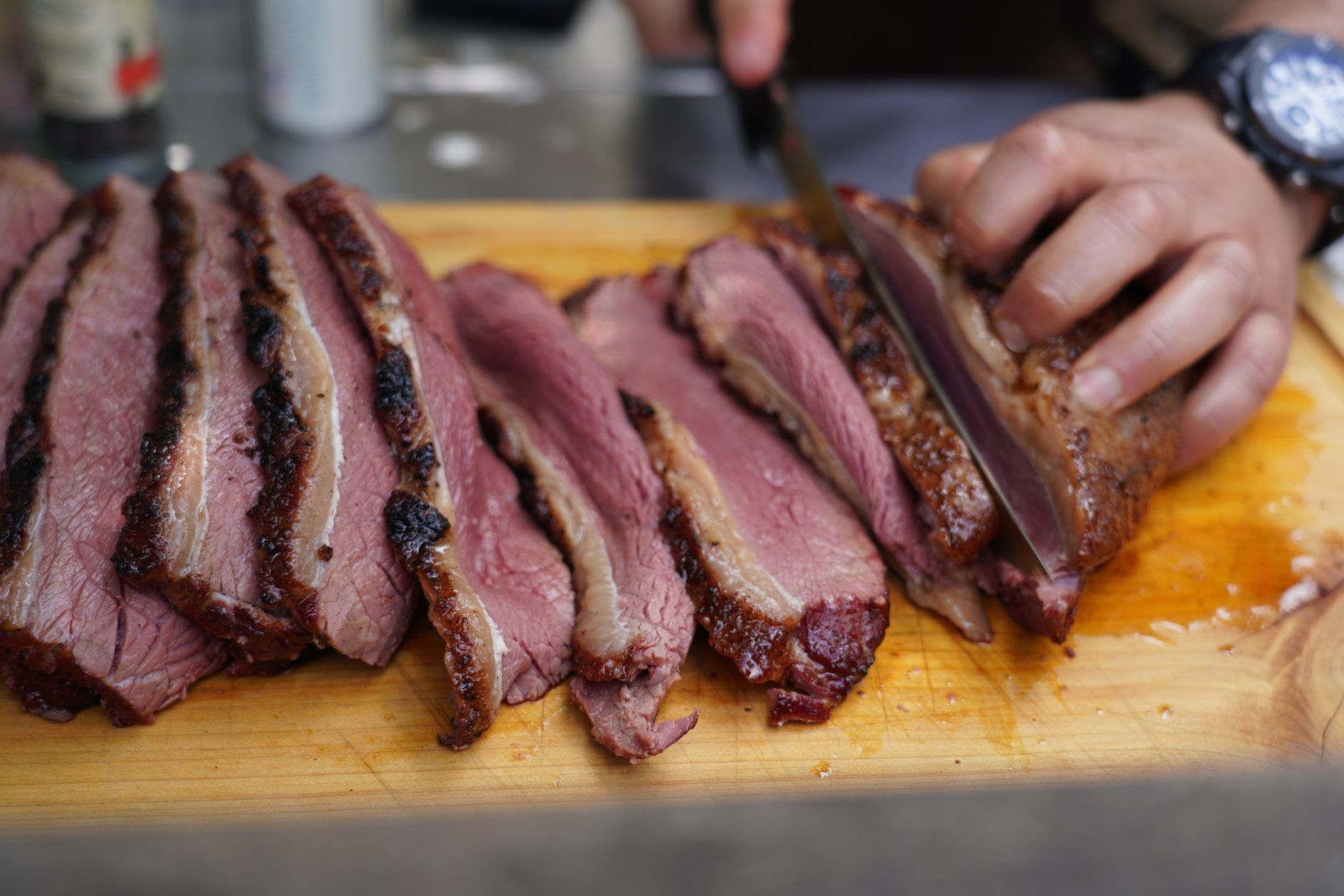
The Slice: This is critical. The flat’s grain runs lengthwise, but it can shift slightly at one end. Identify the direction of the muscle fibers before you cut. Slice pencil-thick (about 1/4 inch) against the grain. If you see long, stringy fibers in your slice, you’re cutting with the grain—rotate the meat 90 degrees.
Serving tip: Separate the slices and fan them on a warm platter. Pour any accumulated juices from the wrap over the top. In 2026, we’re seeing a move away from sauce-heavy brisket; let the beef shine with just a sprinkle of finishing salt.
Mastering how to smoke brisket flat isn’t about shortcuts—it’s about respecting the cut’s leanness while maximizing its potential for perfect bark and uniform slices. With beef prices where they are in 2026, there’s never been a better time to perfect this technique. Fire up your smoker this weekend, grab a Choice-grade flat, and remember: patience at 250°F beats rushing at 300°F every single time. Your sandwiches will thank you.