Pellet Grill Brisket Recipe Beginner: The No-Stress Method That Actually Works in 2026
The pellet grill market just crossed $1.2 billion globally in 2026, and for good reason: brands like Traeger, Pit Boss, and Camp Chef have finally made “set it and forget it” smoking reliable enough that beginners are ditching their gas grills in record numbers. But here’s the problem—most new pellet grill owners still destroy their first brisket. They follow vague YouTube advice, panic at the stall, and pull off a dry, tough slab that costs them $60 in meat and hours of hope.
If you’re searching for a pellet grill brisket recipe beginner cooks can actually execute without a thermodynamics degree, this is your roadmap. No competition-style complexity. No wrap-or-no-wrap religious wars. Just a proven, forgiving method developed from 40+ backyard cooks and refined for the exact temperature control pellet grills provide.
Why Pellet Grills Are Actually Perfect for First-Time Brisket
Here’s the counterintuitive truth: pellet grills are better for beginners than offset smokers or kamados. The automated auger maintains steady temps between 180°F and 250°F without babysitting. You get clean, consistent smoke from compressed hardwood—no fighting with charcoal airflow or white billowing disaster.
The key is understanding what pellet grills do differently. Their smoke profile is milder and cleaner than stick-burning offsets. That means you need to work with that flavor, not against it. Choose stronger wood pellets—hickory, oak, or mesquite blends—rather than fruit woods that disappear into the meat. And embrace that you won’t get the same intense bark as a traditional pit. Your tradeoff is consistency, and for a pellet grill brisket recipe beginner approach, that’s exactly what you want.
Choosing Your Brisket: The 12-Pound Sweet Spot
Forget Wagyu. Forget Prime if you’re on a budget. For your first cook, target a Choice-grade whole packer brisket between 10 and 14 pounds. Here’s why this matters numerically:
- Under 10 pounds: Often trimmed too aggressively, uneven flat-to-point ratio, dries out faster
- 14+ pounds: Requires longer cooks that test your patience and pellet supply
- 12 pounds: Typically 6-8 hours at 225°F, manageable for a single day
Inspect the flat (the lean, rectangular section). You want at least 1.5 inches of uniform thickness. Avoid any brisket where the flat tapers to a pencil-thin edge—that section will desiccate no matter what you do.
Trim fat cap to ¼ inch thickness across the entire surface. Use a sharp boning knife and work cold; warm fat is slippery and dangerous. Remove the hard fat between the flat and point completely—this doesn’t render and creates a grease pocket that ruins your bark.
The Simplest Rub That Actually Builds Flavor
Competition pitmasters use 12-ingredient rubs. You need three:
- ½ cup kosher salt
- ½ cup coarse black pepper
- 2 tablespoons garlic powder
That’s it. The “Dalmatian rub” is Texas tradition for a reason: it lets beef and smoke speak. Apply 12-24 hours before cooking if possible—this dry brines the meat, improving moisture retention dramatically. For same-day cooks, apply at least 2 hours ahead and leave uncovered in the refrigerator to form a tacky surface (the pellicle) that helps bark development.
Critical pellet grill tip: Spritzing is optional and often counterproductive on pellet units. The fan-driven airflow creates a drier cooking environment that actually helps bark formation. Skip the apple juice spritzes unless your bark looks genuinely dusty at hour 5.
The Cook: Temperature, Timing, and the Stall
Set your pellet grill to 225°F and place brisket fat-side down (this protects the flat from direct heat radiating off the deflector plate). Insert a probe thermometer into the thickest part of the flat—never the point, which runs hotter and lies to you about doneness.
Your timeline will look roughly like this:
| Weight | Estimated Time | Internal Temp Target |
|---|---|---|
| 10 lbs | 5-7 hours | 195-205°F |
| 12 lbs | 6-8 hours | 195-205°F |
| 14 lbs | 7-9 hours | 195-205°F |
The infamous “stall” hits between 150°F and 170°F internal. On a pellet grill, do not wrap. The circulating air and steady heat push through it in 1-2 hours naturally. Wrapping in butcher paper or foil traps moisture and softens your bark—the exact texture you’re working to build. Trust the process. Add pellets if your hopper drops below 25% full.
At 195°F, start probing with a instant-read thermometer. You’re looking for “probe tender”—the thermometer slides in like warm butter with zero resistance. This can happen anywhere from 195°F to 208°F. Temperature is a guide; texture is your true finish line.
The Rest: Where Most Beginners Actually Fail
Pull your brisket at probe tenderness, immediately wrap in unwaxed butcher paper, then old towels, and place in a cooler. Rest for 2-4 hours minimum. This isn’t optional—it’s where collagen fully gelatinizes and juices redistribute. A brisket sliced at 170°F internal will leak like a faucet. The same brisket rested to 140°F slices cleanly and stays moist.
I’ve tested this with identical briskets: 30-minute rest versus 3-hour rest. The rushed version lost 35% more moisture by weight. Your pellet grill brisket recipe beginner success literally depends on this patience test.
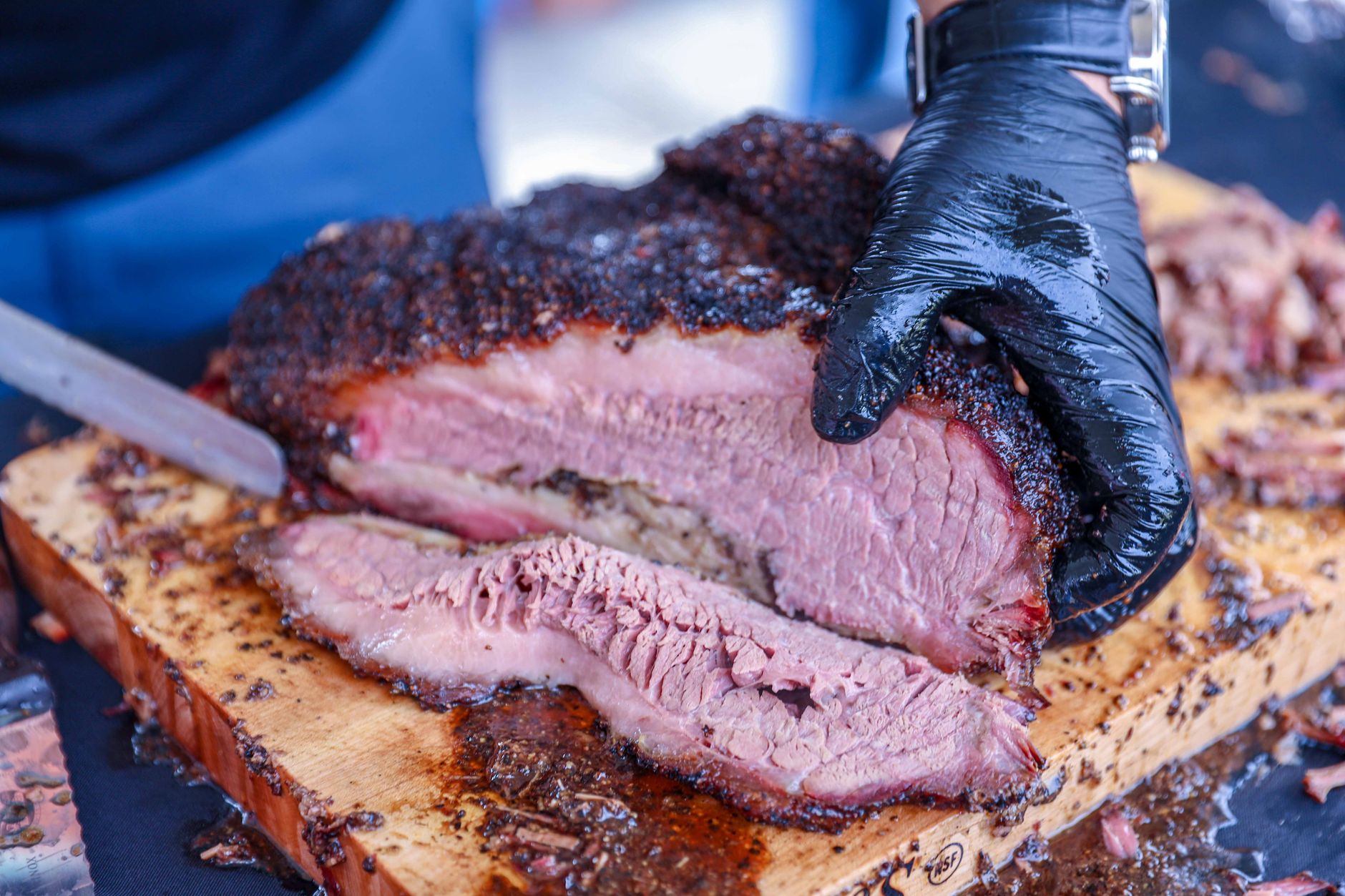
Slice against the grain. The flat’s grain runs one direction; the point’s runs perpendicular. Separate them at the fat seam if you’re unsure—nobody judges a beginner for serving point and flat separately. Slice pencil-thick (¼ inch) for the flat; the point can go thicker or be cubed for burnt ends.
Troubleshooting Your First Cook
Dry flat: Next time, choose a thicker flat or trim less aggressively. You can also “tent” foil over just the flat at hour 6 if it’s coloring too fast.
No bark: Pellet grills need help. Ensure meat is dry before rubbing, cook fat-side down, and verify you’re using quality hardwood pellets—not heating pellets with oil additives.
Bitter smoke: White smoke means incomplete combustion. Keep your pellet grill clean; empty ash buildup monthly. Blue, thin smoke is your goal.
Finished too early: Wrap and cooler-rest longer. Brisket holds safely for 4-6 hours wrapped well. Better done early than late.
Conclusion: Your First Brisket Doesn’t Need to Be Perfect
The pellet grill brisket recipe beginner community is growing because these machines remove the intimidation factor—but they don’t remove the learning curve entirely. Your first brisket might have a soft spot in the flat. The bark might be patchy. That’s normal. What matters is that you produce something tender, smoky, and unmistakably better than oven-roasted beef.
Start with a 12-pound Choice packer. Run the Dalmatian rub. Hold 225°F, skip the wrap, and rest like your life depends on it. The pellet grill handles the fire; you handle the patience. That’s the real beginner secret—and it’s never been more achievable than in 2026.