Smoked Wagyu Brisket Technique: Why the 'Tallow Wrap Method' Is Replacing Foil in 2026
The 2026 BBQ season has officially shifted from “low and slow at all costs” to “smart and specific.” While 5 BBQ recipes that are perfectly on trend for 2026 are making waves across social media—think gochujang-glazed short ribs and coffee-crusted tri-tip—the real pitmaster conversation has moved to how we cook, not just what. And nothing’s generating more debate than the smoked wagyu brisket technique that’s quietly replacing Aaron Franklin’s foil wrap with something far more luxurious: pure beef tallow.
If you’re dropping $120+ on a Wagyu brisket, the last thing you want is the metallic aftertaste and steamed bark that foil can create. The tallow wrap method—borrowed from Texas competition circuits and refined by 2026’s pellet grill enthusiasts—solves this. Here’s the complete breakdown of why this technique works specifically for Wagyu’s fat composition, and how to execute it without ruining your investment.
Why Wagyu Demands a Different Smoked Brisket Technique
Standard Choice or Prime briskets contain roughly 10-15% intramuscular fat. Wagyu—especially American Wagyu (Wagyu-Angus cross) or fullblood Japanese imports—can hit 25-35%. This changes everything about your cook.
The fat renders differently. Wagyu’s fat melts at roughly 77°F lower than standard beef fat, meaning your “stall” behavior changes, your bark formation window narrows, and your margin for error shrinks. Traditional foil wrapping, typically applied at 165°F internal, accelerates cooking but creates a braising environment that dissolves the delicate, lace-like bark you’ve spent 6 hours building.
The tallow advantage: Instead of trapping steam, tallow adds fat while allowing moisture to escape. You maintain bark integrity while accelerating the stall with conductive heat transfer. Think of it as basting from the outside in, rather than steaming from the inside out.
The Tallow Wrap Method: Step-by-Step
This smoked wagyu brisket technique breaks into three distinct phases. Timing matters more than temperature here—Wagyu’s fat composition means your internal thermometer is a guide, not a gospel.
Phase 1: The Naked Smoke (0-5 Hours)
Start with a trim that’s counterintuitive: leave more fat than you would on Prime. Wagyu’s fat is flavor, not insulation. Aim for ¼-inch fat cap, uniform across the flat. Season with a 50/50 salt/pepper base—Wagyu’s beefiness needs no competition. Add 10% garlic powder if you must, but resist the “12-spice rub” impulse.
Run your smoker at 250°F steady, not the 225°F gospel. The extra 25 degrees accounts for Wagyu’s lower fat-melt point and prevents the fat from pooling rather than rendering. Wood choice: post oak or pecan. Hickory overwhelms; fruit woods disappear.
Target: 155°F internal, approximately 5 hours. Bark should be set—not crispy, not soft. Dark mahogany, no black spots.
Phase 2: The Tallow Wrap (The Critical 90 Minutes)
Here’s where the 2026 technique diverges from everything your uncle taught you.
Melt 1.5 cups of rendered Wagyu tallow (available from specialty butchers or render your own from trimmings). Cool to 140°F—hot enough to stay liquid, cool enough not to cook the bark on contact.
Lay out two layers of butcher paper (not foil, not peach paper—standard unwaxed butcher paper). Pour tallow in a thin, even pool. Place brisket fat-side down into the tallow, then wrap tight, crimping edges to seal.
Return to smoker at 275°F. The higher temp post-wrap pushes through the stall faster while the tallow conducts heat evenly across the surface. The paper breathes; moisture escapes; fat penetrates.
Target: 195°F internal, approximately 90 minutes. This is earlier than you’d pull Prime. Wagyu’s loose connective tissue breaks down faster.
Phase 3: The Tallow Rest (Non-Negotiable)
Here’s the secret most skip: rest in warm tallow, not a cooler.
Pour 1 cup fresh tallow into an insulated pan. Place unwrapped brisket directly into warm tallow, fat-side up. Tent loosely with foil. Rest 2 hours minimum, 4 hours ideal. The tallow creates a temperature-stable environment (holds 150°F for hours) while the meat reabsorbs surface juices.
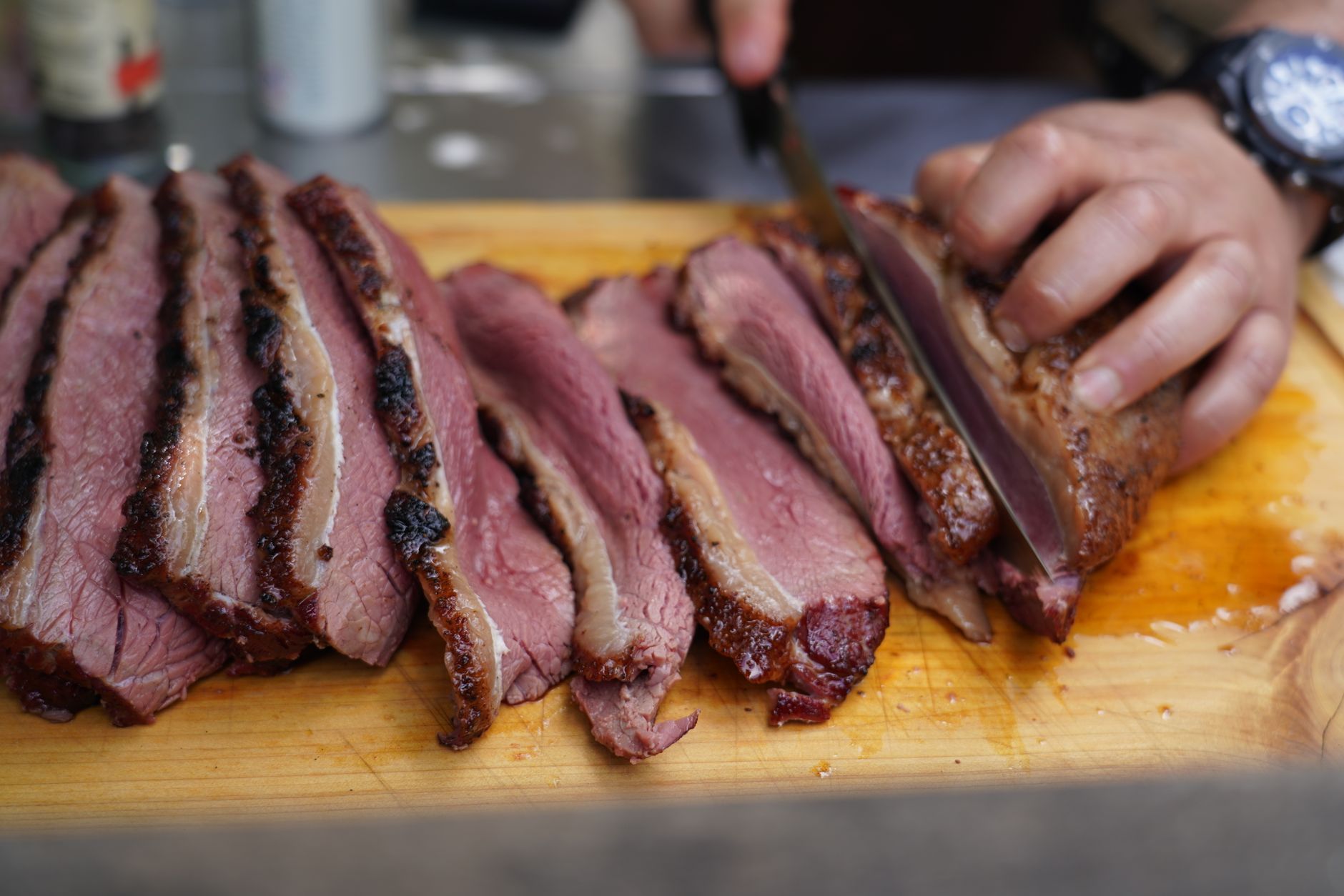
Slice against grain, ¼-inch thick. The tallow rest creates a glossy, almost sushi-like sheen that foil-wrapped briskets never achieve.
Equipment Adjustments for 2026 Setups
This smoked wagyu brisket technique works across fuel types, but requires specific tweaks:
Pellet grills (Traeger, Camp Chef, etc.): The technique’s 2026 popularity stems from pellet consistency. Run a smoke tube for first 3 hours—pellet combustion runs clean, and you need supplemental particulate matter for bark formation. Tallow wrap compensates for pellet grills’ drier heat environment.
Offset stick burners: Reduce wood by 30%. Wagyu fat catches smoke differently; oversmoking creates bitter, metallic notes. Tallow wrap acts as a flavor filter in later stages.
Kamado/Green Egg: Watch your dome thermometers. Kamados run 25-40°F hotter at grate level than indicated. Use a grate probe, not dome.
Oven finish (controversial but effective): If weather turns, transfer tallow-wrapped brisket to 275°F oven at 175°F internal. The wrap holds smoke flavor; the oven provides clean, dry heat to finish.
Reading the Tallow: Doneness Indicators
Wagyu’s tenderness arrives before its temperature confirms it. Ignore the “203°F rule”—test instead:
- Probe test: Thermometer slides like butter at 195-200°F, not 203°F.
- Tallow clarity: Clear, not cloudy, indicates full fat rendering.
- Bark snap: When unwrapped, bark should crack slightly when pressed, not squish.
The 2026 pitmaster mistake: Overcooking Wagyu to Prime standards. It turns to meat butter—literally unsliceable. Pull early; rest long.
Conclusion: Why This Technique Defines 2026 BBQ
The smoked wagyu brisket technique isn’t about chasing virality—it’s about respecting ingredient evolution. As American Wagyu production expands (2026 saw three new domestic fullblood herds certified), home cooks finally have access to beef that demands rethinking fundamentals.
The tallow wrap method replaces the foil crutch with fat-forward intention. It acknowledges that Wagyu isn’t “better brisket”—it’s different brisket, with different physics, different flavor architecture, and different technique requirements. While 5 BBQ recipes that are perfectly on trend for 2026 will come and go, method refinements like this stick because they solve real problems.
Your next cook: Source a Snake River Farms or Crowd Cow American Wagyu brisket. Trim with restraint. Smoke at 250°F. Wrap in tallow at 155°F. Rest in tallow at 195°F. Slice at ¼-inch. Serve without sauce—this technique produces brisket that needs no disguise.
The foil era is ending. The tallow era has begun.